By Rachel Huss, Managing Editor
A vast majority of us on Sunday, February 8th gathered with friends and family to watch the Seattle Seahawks play against the New England Patriots to claim the Super Bowl LX victory. While many claim the game was boring, this year’s Super Bowl brought something insightful, symbolic, and entertaining to our screens.
Benito Antonio Martínez Ocasio, also known as “Bad Bunny,” is a 31-year-old Puerto Rican singer, rapper, and music producer. He is commonly referred to as the “King of Latin Trap.” In 2025, Spotify declared Bad Bunny as the most-streamed artist of the year. He secured the global number one spot for the fourth time with over 19.8 billion streams. While his halftime show created political divide, those who watched his performance noticed much storytelling and symbolism from the clothes he was wearing to the set he designed.
The Jersey
To begin his performance, he is seen wearing a cream-colored football jersey with the number sixty-four on the back. The name above the number read “Ocasio.” The number sixty-four is representative of Bad Bunny’s uncle, Cutito, who passed away two years ago and was born in 1964. Bad Bunny commented, “My uncle passed away two years ago, shortly after the 49ers lost to Kansas City in the 2024 Super Bowl. I always dreamed of taking my uncle to a Super Bowl, and I couldn’t.”
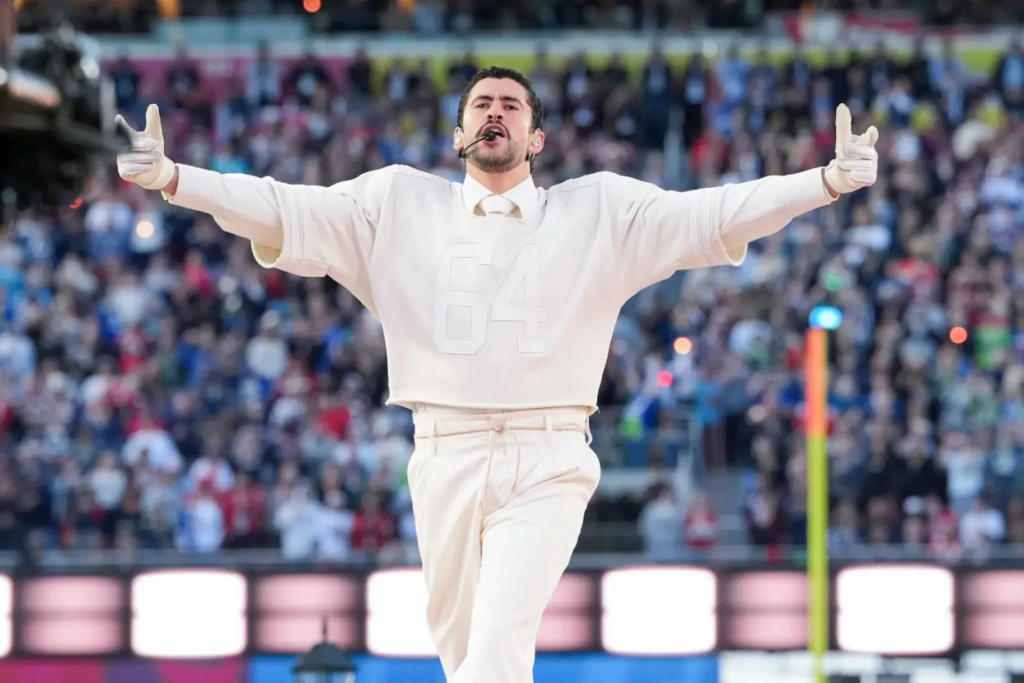
Bad Bunny opening his halftime performance. Photo courtesy of RollingStone.
Backup Dancers
If you paid any attention to the backup dancers, you would see they were wearing hats. These hats are called pavas, brimmed straw hats made from leaves of the Puerto Rican hat palm. Historically, they were often worn by jibaros, rural residents who worked as farmers on the island. At the 2025 Met Gala, Bad Bunny wore a revamped pava with his outfit.
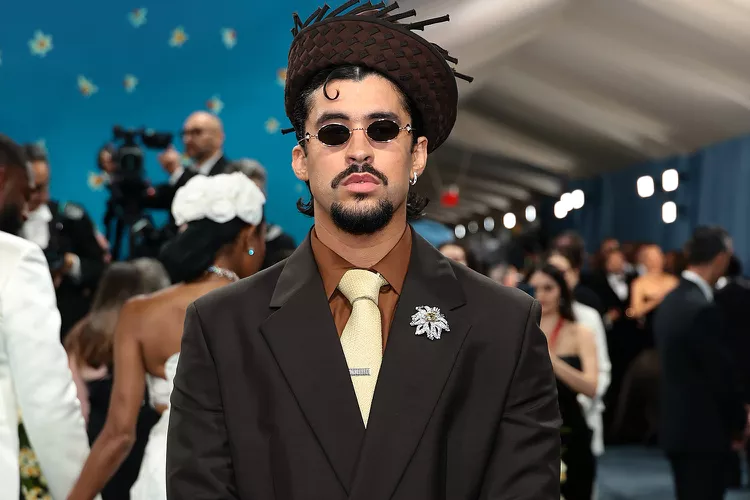
Bad Bunny showing off his pava on the 2025 Met Gala red carpet. Photo courtesy of People.
Businesses
While performing, Bad Bunny passed through dancers cosplaying as customers surrounding a coco frio cart. Coco frio is fresh coconut water, a beverage commonly sold by street vendors on the island. You also see him stop at a piraguas cart and grab a Puerto Rican version of a snow cone.
Bad Bunny highlighted a business in New York, La Marqueta. It is currently a business in East Harlem, but it was once an informal gathering place for the Latino immigrant community from the 1930s through the 1950s.
He also had other businesses displayed during his performance like a nail salon and a barber shop.
Celebrations
Bad Bunny paid tribute to the island’s love of big parties through the house-shaped set, La Casita, and the real wedding that took place.
The house was inspired by traditional Puerto Rican homes. The lively atmosphere in front of La Casita is a symbol of a tradition called marquesinas (house parties).
Initially, I thought the wedding was fake and a part of the performance. However, I was wrong. The couple was legally married during the halftime show. The couple originally invited Bad Bunny to their wedding, and then he invited them to be married during his performance. He served as their witness and signed their marriage license.
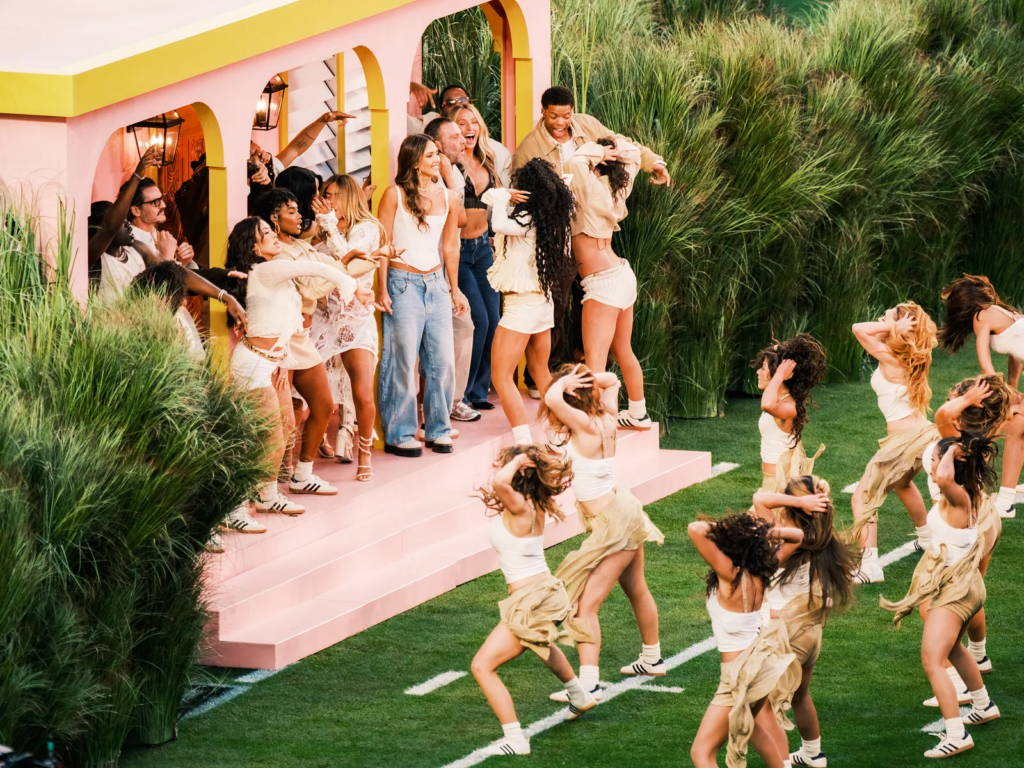
The depicted marquesina in front of La Casita. Photo courtesy of Wired.
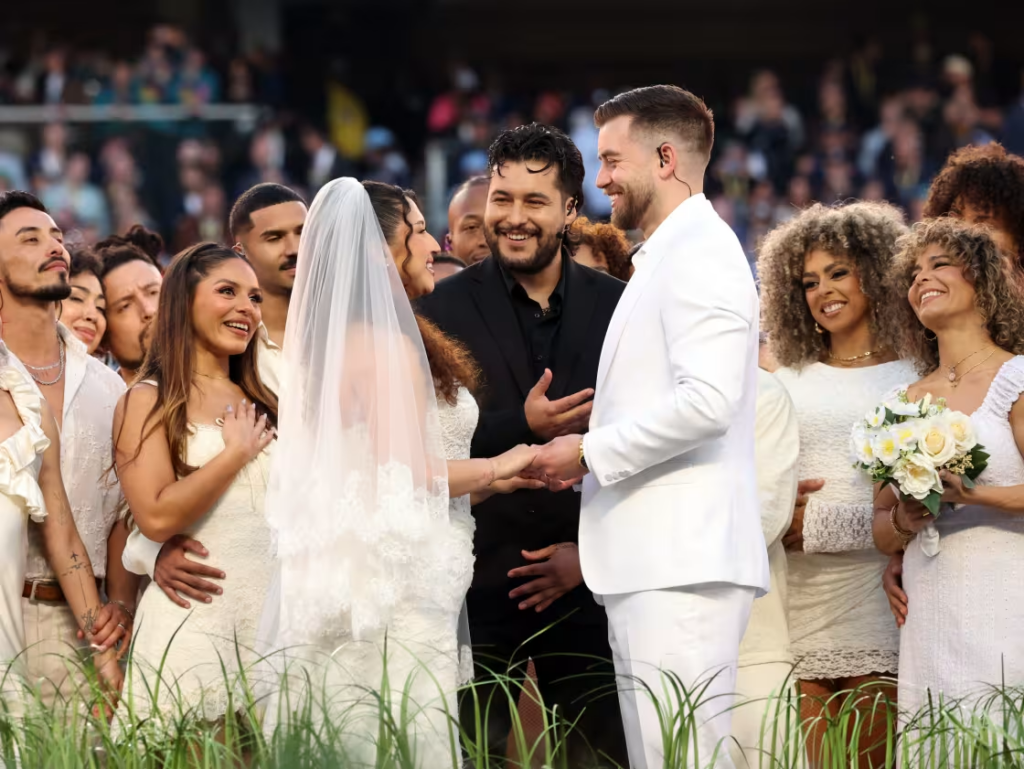
The real wedding that took place. Photo courtesy of Today.
Lady Gaga
To my utter shock, Lady Gaga was performing with Bad Bunny. This was a duo I would have never expected, but it awed me. Lady Gaga was dressed in a light blue dress with a red floral brooch resembling the maga flower, the national Puerto Rican flower.
She sang at what appeared to be the married couples’ reception. She performed a salsa-inspired dance with Bad Bunny before the camera panned to the couple cutting their cake.
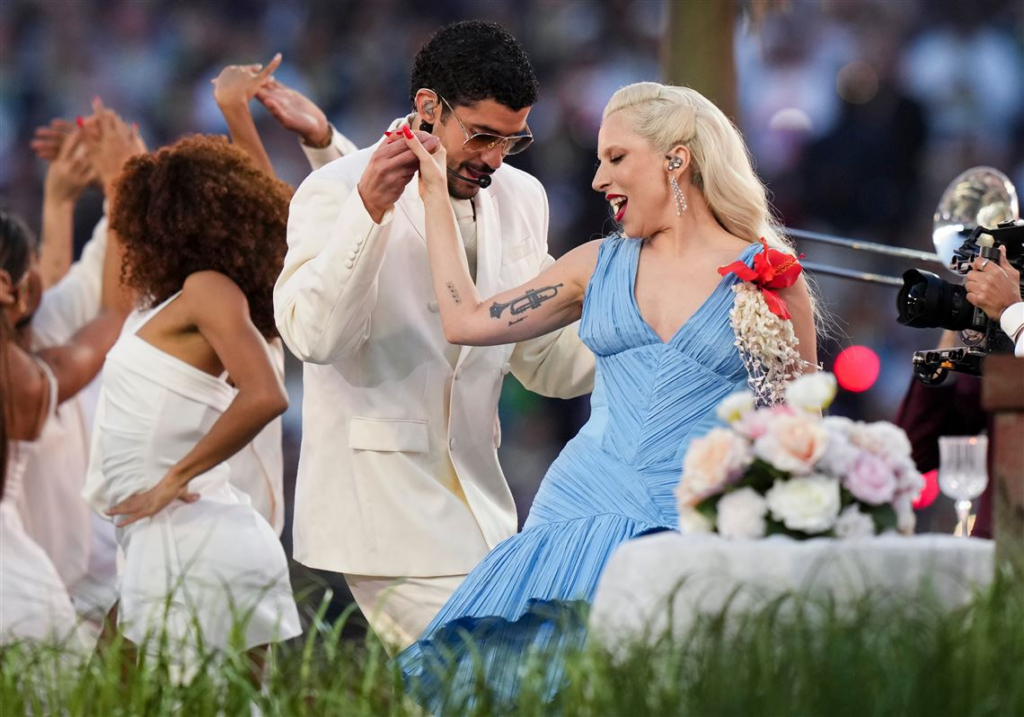
Bad Bunny and Lady Gaga performing their salsa-inspired dance. Photo courtesy of Pittsburgh Post-Gazette.
Grammy’s
As Bad Bunny’s performance went on, we witnessed him giving his Grammy from the most recent award show to a young boy that was watching Bad Bunny on TV. Bad Bunny had made history by having the first Spanish album to win album of the year. Bad Bunny giving his Grammy to the boy is supposed to represent himself as a child, looking into the future with hope and determination.
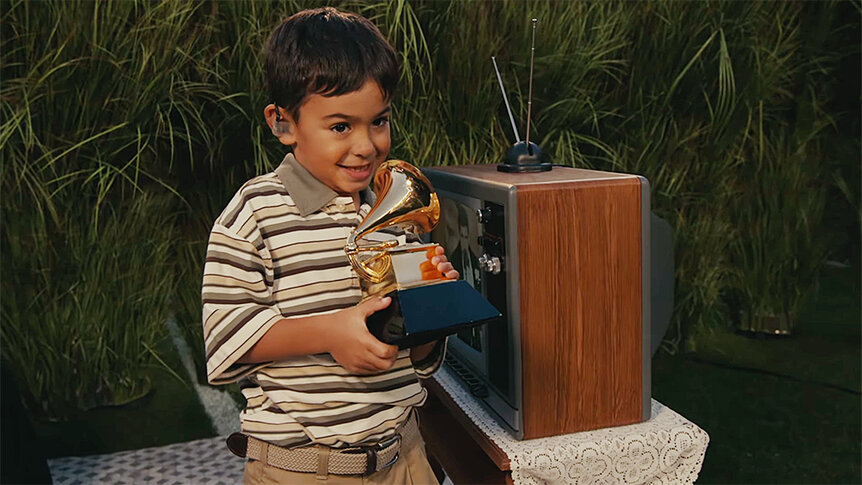
5-year-old, Lincoln Fox, holding Bad Bunny’s Grammy. Photo courtesy of NBC.
Political History
Fellow Puerto Rican singer-songwriter Ricky Martin sang Bad Bunny’s ballad “Lo Que Le Paso a Hawaii” (What Happened to Hawaii). This moving tune captured concern about gentrification in Puerto Rico.
Ricky Martin sang, “They want to take my river and my beach, too. They want my neighborhood and grandma to leave… Cause I don’t want them to do to you what happened to Hawaii.”
Another political reference that left many people pondering was the significance of the power lines. In Bad Bunny’s “El Apagón”, he references Puerto Rico’s economic challenges with the island’s electrical system. While performing, the power lines next to Bad Bunny “exploded” to symbolize their frequent power outages. There is also a theory that this was a diss in relation to the back-to-back hurricanes in 2017 when Puerto Rico experienced controversy and delays in aid from the U.S. government.
We’re also going to take a look at the moment when Bad Bunny emerges, carrying the Puerto Rican flag with a light blue triangle rather than the common dark blue triangle flag.
The light blue triangle flag is associated with sovereignty and political independence, which contrasts the American flag’s dark blue shade. An official shade of blue has not been established for Puerto Rico’s flag.
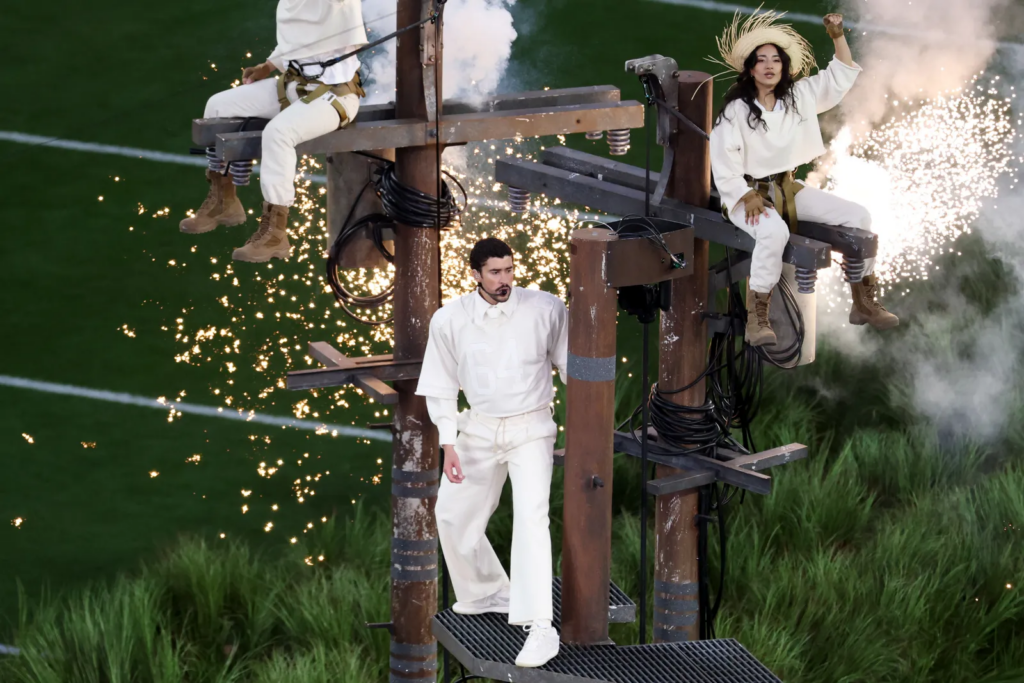
The electrical lines “exploding” next to Bad Bunny. Photo courtesy of Wired.
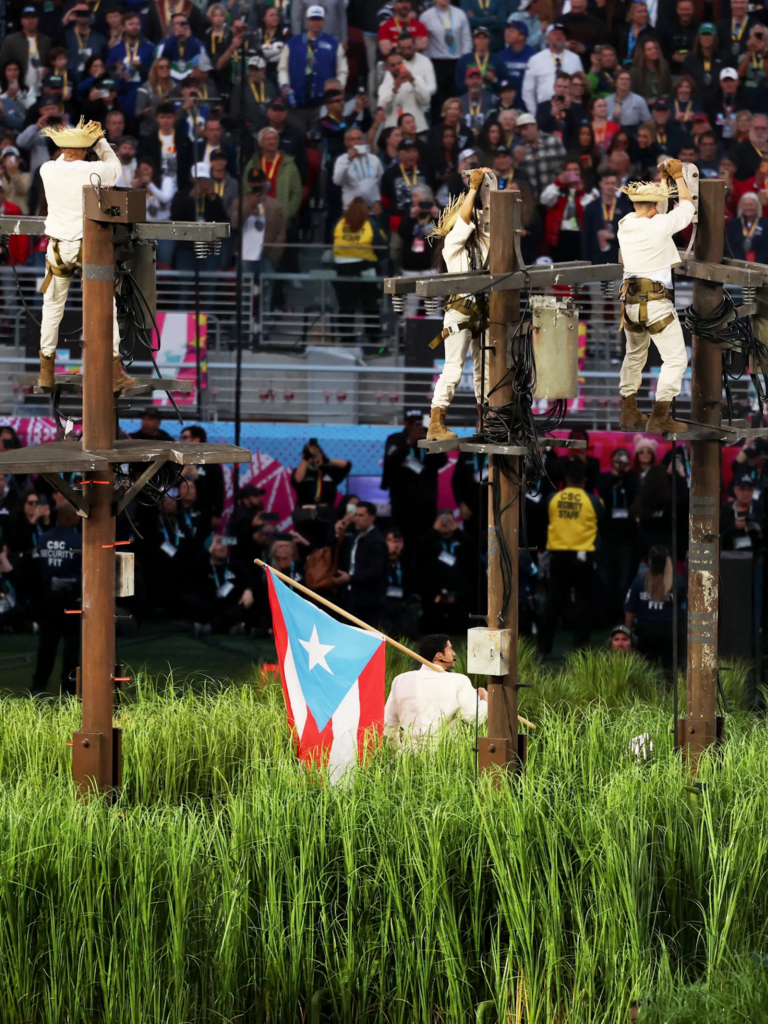
Bad Bunny holding the light blue Puerto Rican flag. Photo courtesy of Wired.
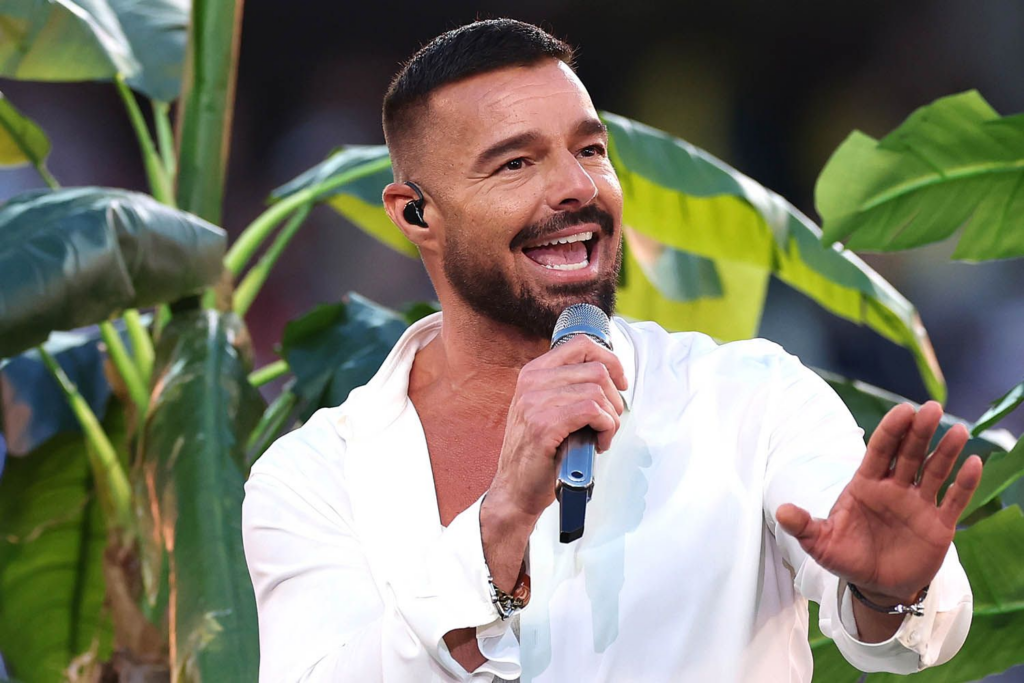
Ricky Martin performing his segment. Photo courtesy of People.
Fun Fact
A little fun fact to finish off: Bad Bunny’s performance featured many different instruments, some we all know of and some we’re not familiar with. There were many more unique instruments used during the halftime show than what I disclosed. All of the instruments listed are of Puerto Rican culture.
The first one is a pandero, which is a tambourine-like hand drum, not quite our traditional tambourine but very similar. The second instrument is actually Puerto Rico’s national instrument, the cuatro. The cuatro is a 10-string guitar. One instrument we’ve all heard of but is traditional to Puerto Rico is the maracas. The maraca rattle was traditionally made from the fruit of the higuera tree.
Whether you watched the Super Bowl LX halftime show or not, we can all agree that the amount of symbolism and metaphor displayed by Bad Bunny and his team was astronomical. Personally, I found it very fun and interesting to watch. I truly enjoyed researching the deeper meanings of his performance.
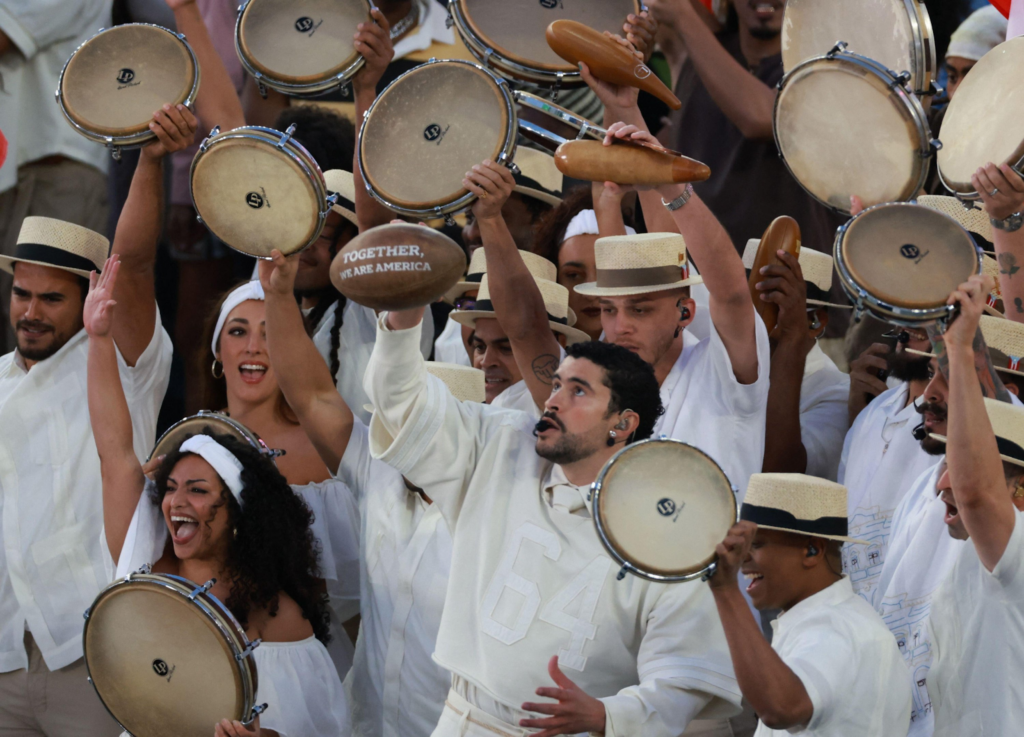
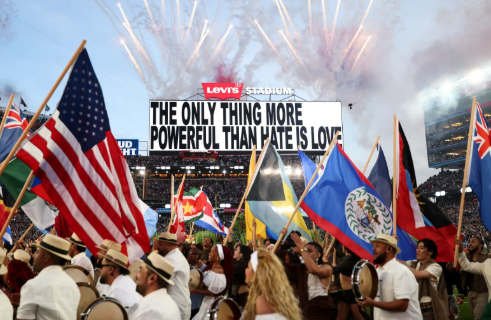
Bad Bunny holds a football reading, “Together, we are America”, while his backup performers play panderos. Photo courtesy of The Face.
Sources:
All the Bad Bunny easter eggs at Super Bowl halftime show, explained
What did Bad Bunny’s Halftime Show Mean? Every Cultural Reference Broken Down
Bad Bunny’s Super Bowl Halftime Performance Draws in 128 Million Viewers
Inside Bad Bunny’s Historic Super Bowl Halftime Show | WIRED
The Wedding During Bad Bunny’s Halftime Show Was Real. The Dress Designer Shares How It Happened
Who Was the Young Boy Bad Bunny Gave His Grammy To at the Halftime Show?
Bad Bunny’s halftime show represented something bigger than music
Bad Bunny Wears Prada and Teases New Tour At The 2025 Met Gala: ‘Going to be a Huge Party’